
How to Ace HSC Mathematics: Stop Memorising, Start Understanding
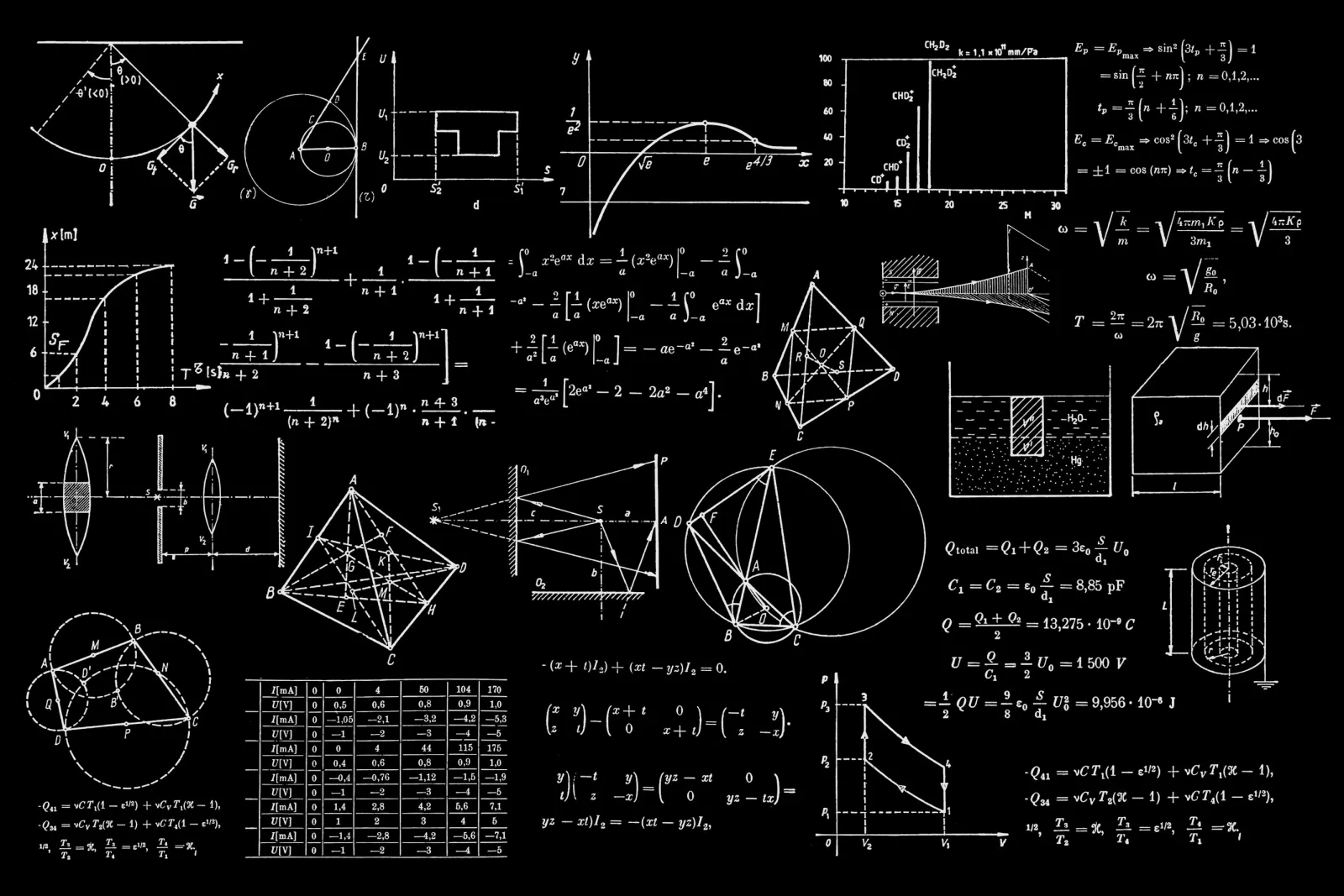
Mathematics is often perceived as a subject of infinite formulas to be memorised. However, the top-performing students in HSC Mathematics (Standard, Advanced, and Extension) share a common secret: they don't memorise; they understand.
The Problem with Rote Learning
When you memorise a formula without understanding its derivation or geometric meaning, you are fragile. The moment the Board of Studies (NESA) throws a curveball question that looks slightly different from your textbook, your memorised response fails.
- You forget under pressure. Memory is the first thing to go during exam stress.
- You can't adapt. Complex "Band 6 differentiator" questions always require combining multiple concepts in novel ways.
Building Mathematical Intuition
To truly excel, you need to build intuition. This means asking "why?" instead of just "how?".
1. Visualise Everything
Don't just look at y = mx + b. Think about what m physically represents on a graph. When studying calculus, don't just memorise the power rule; understand that a derivative is simply the instantaneous rate of change, the slope of the tangent line.
2. Derive the Formulas
Take the time to derive formulas from first principles. If you can derive the quadratic formula by completing the square, you will never forget it. More importantly, you'll understand the structure of parabolas on a much deeper level.
3. Teach It to Someone Else
The Feynman Technique is incredibly powerful for mathematics. Try explaining a complex concept (like integration by parts or mathematical induction) to a friend or parent. If you stumble, you've found a gap in your fundamental understanding.
The Shoreline Approach
At Shoreline Tutoring, we never just give students the formula sheet and practice questions. We spend the critical first 20 minutes of every session building the logical foundation. We want you to see the matrix of mathematics.
Once the foundation is solid, the practice questions become a breeze, and you'll find yourself actually enjoying the challenge of difficult problems.