
How to Ace the Selective High School Writing Exam: What Markers Look For and How to Deliver It
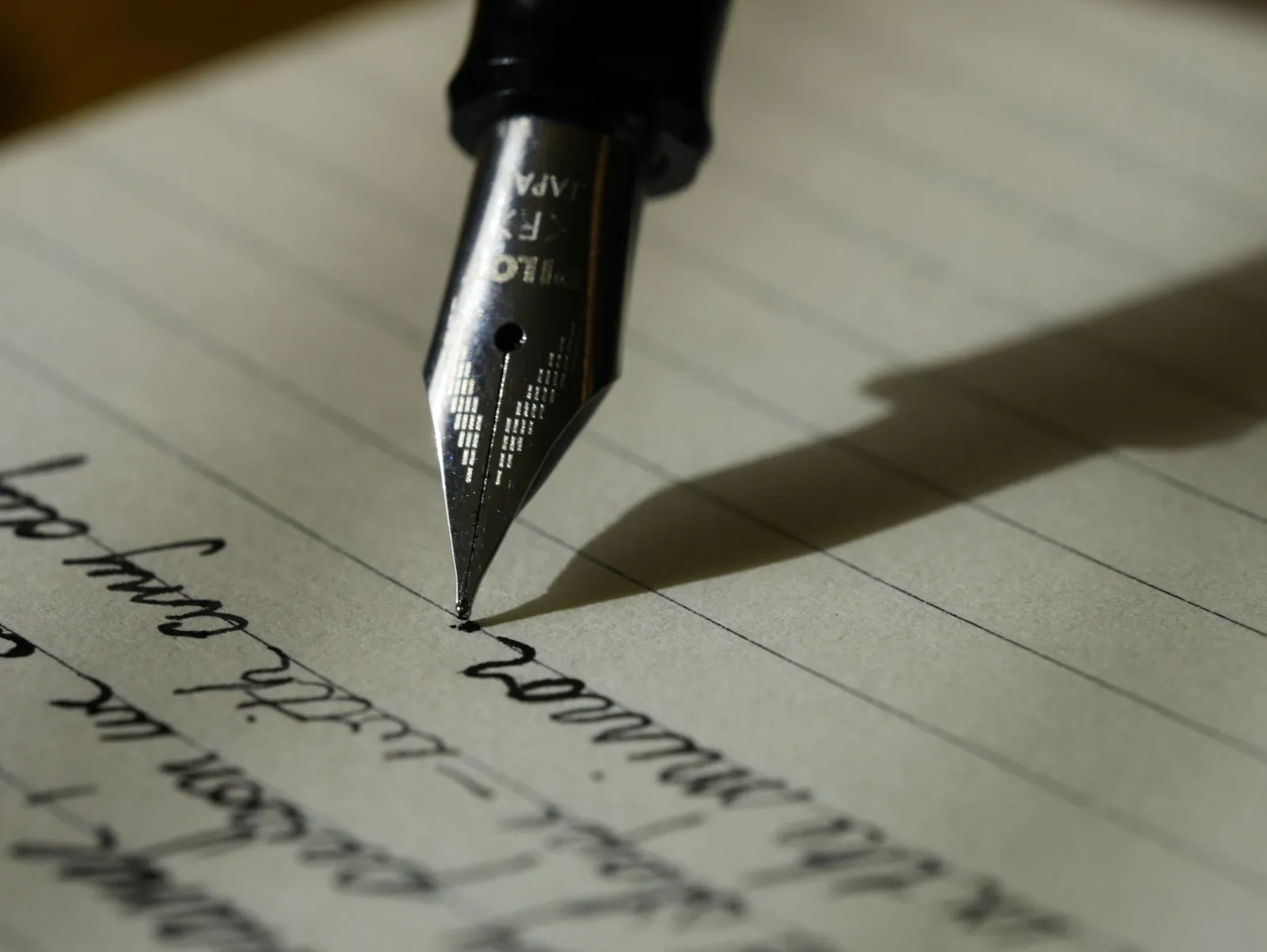
The writing component of the Selective High School Placement Test gives students thirty minutes to produce a piece of writing in response to a prompt. It is the only section of the test that requires extended production rather than selection, and it is the section where deliberate preparation produces the most visible improvement. It is also the section most commonly misunderstood, both by students who believe that writing well means writing a lot, and by those who believe that practising a fixed essay template is sufficient preparation for any prompt they might encounter.
What the writing component actually rewards is neither length nor formula. It rewards a student who reads the prompt carefully, forms a genuine idea in response to it, expresses that idea with control and precision, and does so within a structure that a reader can follow. These qualities are developed through a specific kind of writing practice, not writing frequently, but writing deliberately and reviewing honestly.
Understand the marking criteria
The Selective writing task is assessed across three broad dimensions: ideas and content, structure and organisation, and language and expression. Understanding what each dimension actually rewards changes how a student approaches both preparation and the exam itself.
Ideas and content is assessed on the quality and originality of what a student writes, whether the piece has a genuine perspective, whether it engages with the prompt in an interesting or unexpected way, whether the details and examples chosen are specific and purposeful rather than vague and generic. A response that produces a predictable interpretation of the prompt with predictable supporting ideas will score lower than one that finds an angle the marker has not seen many times before.
Structure and organisation is assessed on whether the piece has a clear shape, whether it opens in a way that establishes direction, develops that direction through the body, and reaches a conclusion that feels earned rather than arbitrary. This does not mean rigidly following a five-paragraph essay template. It means that a reader can follow the logic of the piece from beginning to end without confusion about where it is going.
Language and expression is assessed on the quality and variety of word choices, sentence construction, and control of grammar and punctuation. A student who writes in varied sentence lengths, chooses precise rather than vague words, and uses punctuation deliberately, not just correctly but purposefully, will score more highly than one whose writing is grammatically correct but monotonously constructed.
Read the prompt with genuine attention
The most consequential decision in the writing exam happens in the first two minutes: how the student interprets the prompt. A prompt is not just a topic, it is an invitation to a particular kind of thinking. Students who read the prompt quickly and begin writing what they planned to write regardless of the specific wording will frequently produce a response that is technically competent but fundamentally misaligned with what was asked. Markers notice this, and it limits the marks available for ideas and content regardless of how well the rest is executed.
The discipline is to read the prompt twice, slowly, and to identify: what type of writing is being invited (narrative, persuasive, reflective, descriptive), what the specific focus or angle is, and whether there is an unexpected or less obvious interpretation available. The less obvious interpretation, when it genuinely engages with the prompt rather than avoiding it, almost always produces a more interesting response than the first idea a student reaches for.
The value of the unexpected angle:
Prompt: "Write about a time when something small turned out to matter greatly."
Predictable response: A student writes about losing something small, a key, a note, a phone, and discovers it was important. The structure is familiar, the idea is unremarkable, and the marker has read many versions of it.
Less obvious response: A student writes about a single sentence someone said in passing, a comment from a teacher, a stranger's question, that shifted how they thought about something fundamental. The "small thing" is not an object but a moment of language. The piece has an idea at its centre that most responses will not have.
Both responses are valid. The second is more likely to be remembered.
Plan before writing, even briefly
Students who begin writing the moment the exam opens frequently produce responses that run out of direction halfway through, arrive at a conclusion that contradicts the opening, or simply trail off when the energy of the initial idea is exhausted. Two to three minutes of planning, identifying the central idea, sketching the shape of the response, and deciding how it will end before it begins, produces structurally more coherent writing than an unplanned approach, regardless of how naturally talented the writer is.
The plan does not need to be elaborate. For a narrative piece, it is enough to know: what happens, in what order, and what the final moment or image will be. For a persuasive or reflective piece, it is enough to know: what the central argument is, what two or three points will develop it, and how the piece will close. Students who know the ending before they start writing produce endings that feel intentional, which is one of the most significant markers of quality in student writing at this level.
The most important sentence in any response: The opening sentence is the most consequential sentence in the piece. It establishes the register, signals the quality of the writer's thinking, and determines whether the marker begins reading with interest or obligation. An opening that begins with "I am going to write about..." or "In this story..." signals immediately that the writer has not thought carefully about their entry point. A strong opening drops the reader into the middle of something, a moment, an image, a claim, a question, rather than announcing what is about to happen. Students who practise writing five different possible opening sentences for a single prompt, then choosing the best one, develop a reliable instinct for the quality that markers respond to.
Write with precision, not volume
A common misconception is that longer responses score higher. They do not, a tightly written piece of four paragraphs will outscore a sprawling piece of seven that loses direction and repeats itself. What markers reward is a response where every sentence is doing useful work: advancing the narrative, developing the argument, or creating an effect. Sentences that restate what has already been said, pad towards a word count, or hedge unnecessarily are visible to experienced markers and actively reduce the quality impression of the piece.
The language quality that most reliably distinguishes high-scoring writing from average writing at this level is specificity. Vague words, nice, good, big, interesting, important, carry no weight and can always be replaced with a more precise choice that does the same job and creates a sharper impression. A character is not "an old man", he is "a man in his seventies with a limp he had never explained." An argument is not "very important", it is "the argument most people stop thinking about." Specificity is the single most accessible and most impactful improvement most students can make to their writing.
Develop sentence variety deliberately
Writing that consists entirely of sentences of similar length and structure reads as flat, regardless of how interesting the ideas are. Varied sentence length creates rhythm, emphasis, and momentum. A short sentence after several long ones carries disproportionate impact. A long sentence that accumulates detail and then arrives at a brief, sharp close creates exactly the contrast that holds a reader's attention.
The most practical way to develop sentence variety is to review finished pieces and count the lengths of consecutive sentences. Any passage where five or more sentences are within three words of each other in length should be revised, not because long sentences are wrong, but because sameness is. Students who develop the habit of varying sentence length as they write, rather than as a revision step, reach the point where it becomes automatic well before the exam.
Practise completing full responses in thirty minutes
The most important thing about the writing exam that practice must replicate is the time constraint. Thirty minutes is not long, it is enough to produce a good response, but not enough to recover from a plan that was not formed before writing began, or to revise extensively once the draft is complete. Students who have only ever written without a clock will not know whether they can produce a complete, structured piece in the available time until they discover this on exam day.
Timed practice sessions should be followed by deliberate review: reading the piece as a marker would, identifying where the response is strong and where it loses direction, and selecting one or two specific things to improve in the next practice session. Reviewing finished writing against the marking criteria, not just for grammar and spelling, but for the quality of ideas, the coherence of structure, and the precision of language, is the only preparation that produces the specific improvements that move a response from good to excellent.
At Shoreline, writing preparation starts from the observation that most students who underperform in the writing exam are not poor writers, they are writers who have not been taught to read their own work as a marker would. The transition from writing freely to writing with awareness of effect, structure, and precision is not a natural development; it requires explicit instruction and honest feedback. The students who improve most rapidly are those who learn to look at their own sentences and ask not "is this correct?" but "is this doing what I want it to do?" That question, applied consistently over months of practice, is what produces writing that markers remember.